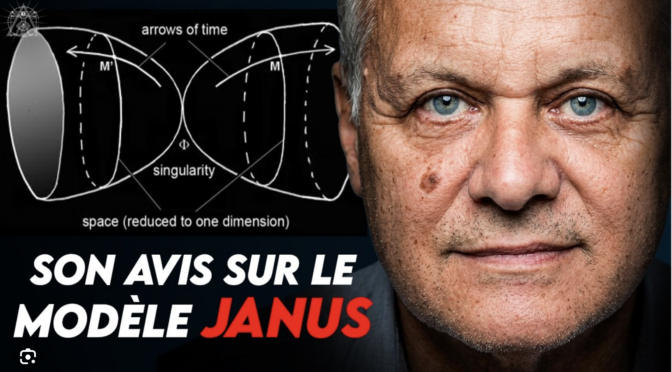
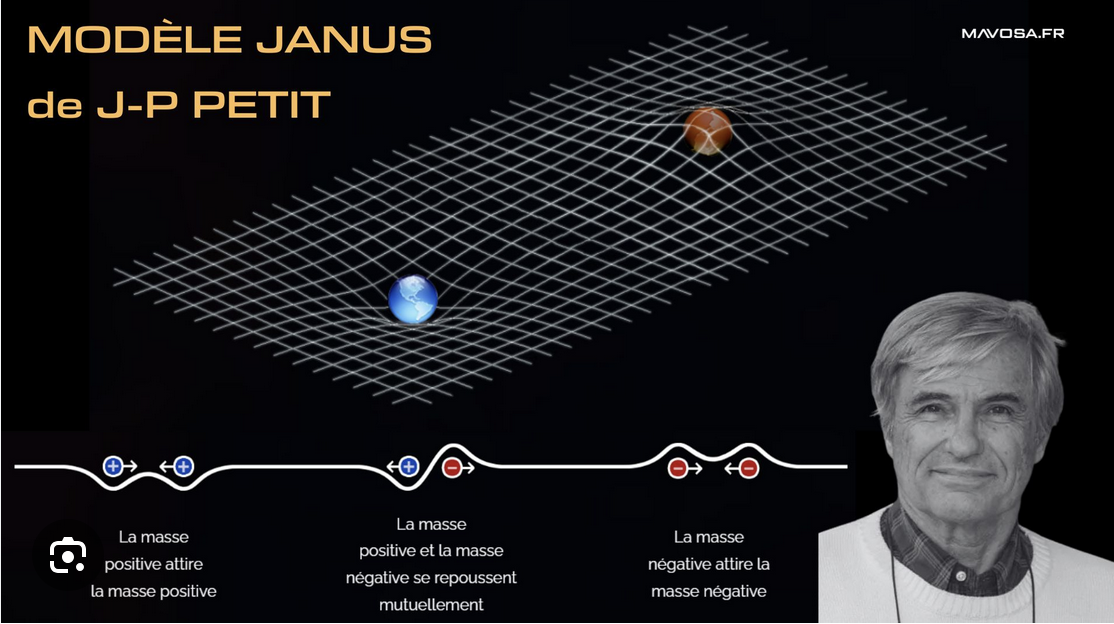
Cela fait plusieurs années que mon collègue Jean-Pierre Petit et ses collaborateurs clament l’inconsistance mathématique et physique des modèles relativistes de trou noir, dans le but de promouvoir leur alternative dite des « plugstars », qui selon eux serait soutenue par leur modèle cosmologique Janus.

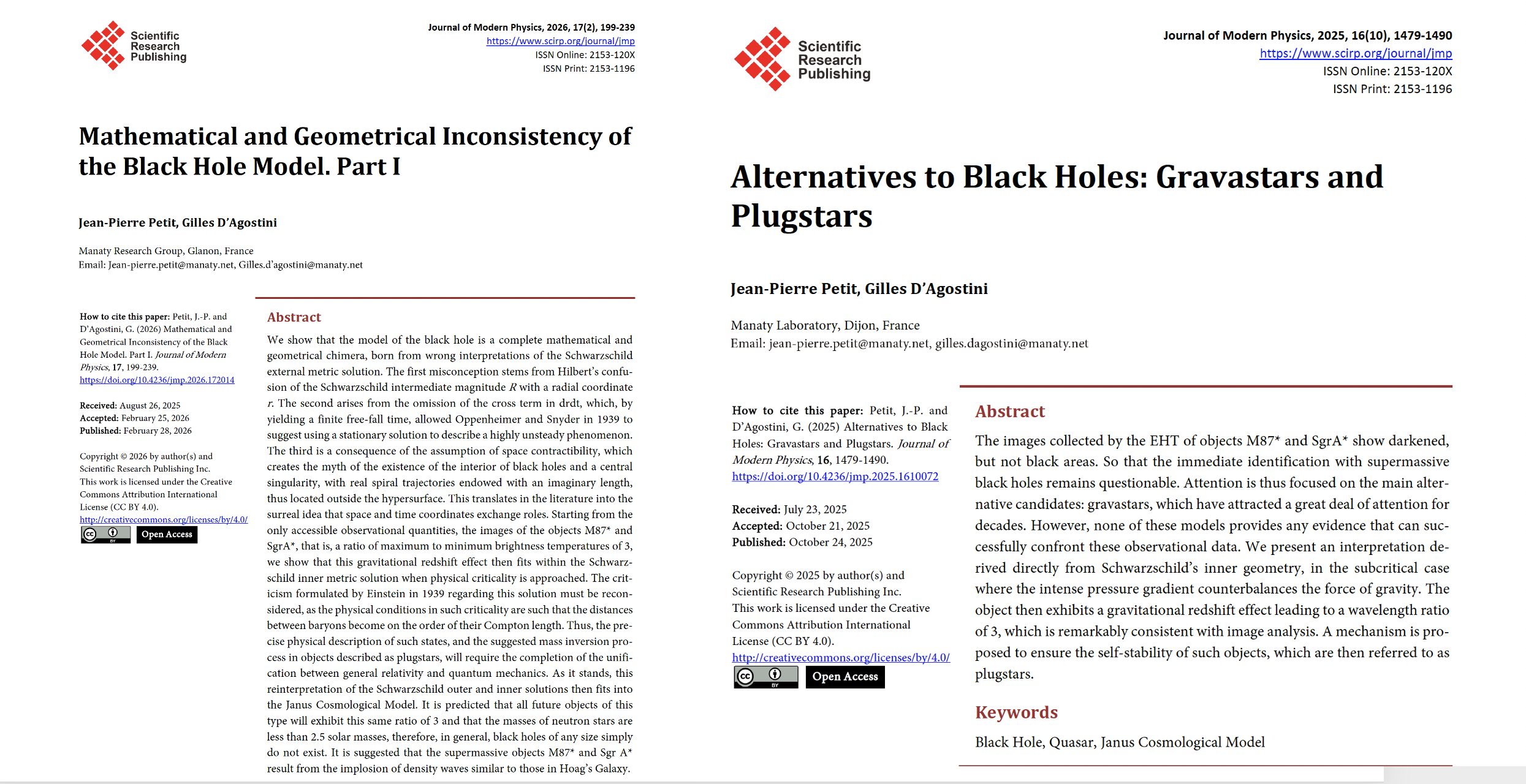
Après s’être heurté durant des années à un rejet de publication de la part des « referees » des grandes revues scientifiques, en peaufinant leur argumentaire ils ont fini par réussir à publier récemment deux articles dans Journal of Modern Physics (2025), 16(10), 1479-1490 et (2026), 17(2), 199 -239. Bravo pour leur persévérance ! Mais cela valide-t-il pour autant leur propos ? Certainement pas. Dans ce premier billet je me contenterai de montrer explicitement les failles principales de leur travail sur l’incohérence mathématique de la théorie des trous noirs. dans un second billet j’étendrai ma critique aux fondements du “modèle Janus” qui prétend rebâtir toute la cosmologie.
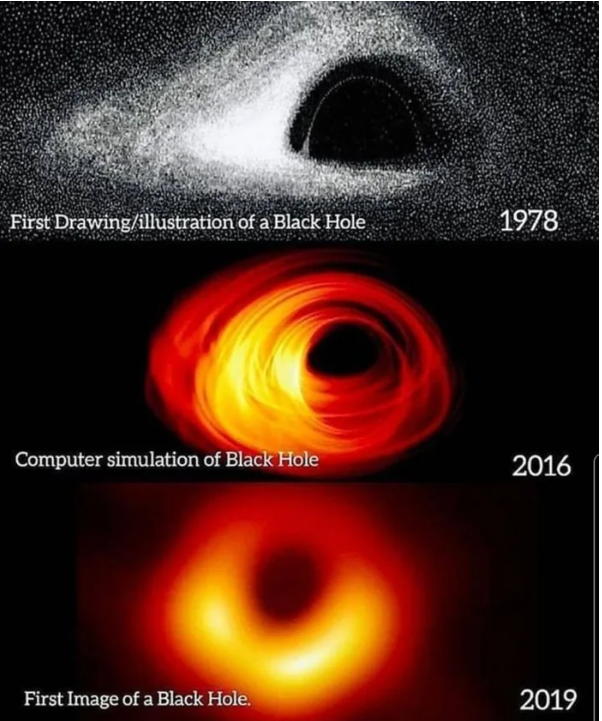
Je précise d’emblée que ce n’est pas parce que j’ai consacré quelques dizaines d’années de recherches aux trous noirs, objets aux propriétés étranges et fascinantes dont j’ai réalisé dès 1978 les premières visualisations exactes, validées 40 ans plus tard par les observations télescopiques de l’Event Horizon Telescope (contestées par JP Petit et al.) que je « crois ferme » à leur existence dans l’univers réel. Mais ce ne sont certainement pas les arguments erronés avancés par l’équipe de JPP qui me feront douter de leur pertinence, au minimum théorique, sinon observationnelle.
Avant de critiquer en détail les deux articles susmentionnés, je voudrais rappeler que l’idée de contester la validité mathématique de la solution de Schwarzschild n’est pas nouvelle. Je m’étais déjà donné le mal de l’expliquer il y a quelques années, mais sans résultat. J’y disais que la première traduction en anglais de l’article de Schwarzschild (originellement en allemand), publiée en 1999 par S. Antoci et Loinger [arXiv:physics/9905030], avait réactivé des doutes sur l’interprétation du calcul de Schwarzschild chez certains chercheurs instinctivement allergiques au concept de trou noir (défini correctement par un horizon des événements, et non, comme beaucoup le croient à tort, par une singularité gravitationnelle). En effet, Antoci et Loinger avaient cru bon d’agrémenter leur traduction d’un bref « foreword » affirmant péremptoirement et sans démonstration technique:
“This fundamental memoir contains the ORIGINAL form of the solution of Schwarzschild’s problem. It is regular in the whole space-time, with the only exception of the origin of the spatial co-ordinates; consequently, it leaves no room for the science fiction of the black holes. (In the centuries of the decline of the Roman Empire people said: “Graecum est, non legitur”…).”
Or, contrairement à ce qu’avancent JPP et ses collègues, ce n’est pas parce que les articles de Schwarzschild n’étaient pas traduits en anglais qu’ils étaient ignorés de la communauté des théoriciens, lesquels se seraient contentés de répéter depuis un siècle une « erreur » de Hilbert sans vérifier à la source. Avant cette traduction de 1999, plusieurs chercheurs avaient déjà glosé fallacieusement sur cette prétendue « erreur » de Hilbert qui, selon eux, aurait invalidé l’extension analytique maximale de Kruskal et Fronsdal et le concept de trou noir. Voir par exemple L. Abrams (Can. J. Phys. 67 (1989) 919 – arXiv :gr-qc/0102055 ). Jean-Pierre Petit et al. reprennent la même argumentation dans le but essentiel d’écarter la possibilité de formation d’un horizon des événements et de promouvoir leur modèle alternatif de “plugstar”. Or, concernant du moins les interprétations de la solution de Schwarszchild, Hilbert, etc., le débat faussement ouvert par Antoci et Loinger a été clos rapidement:
(a) En 2011, C. Corda publie “A clarification on the debate on ‘the original Schwarzschild solution’” [Arxiv 1010.6031 [gr-qc] Electron.J.Theor.Phys. 8 (2011) 25, 65-82], dont voici l’abstract :
“Now that English translations of Schwarzschild’s original paper exist, that paper has become accessible to more people. Historically, the so-called ‘standard Schwarzschild solution’ was not the original Schwarzschild’s work, but it is actually due to J. Droste and, independently, H. Weyl, while it has been ultimately enabled like correct solution by D. Hilbert. Based on this, there are authors who claim that the work of Hilbert was wrong and that Hilbert’s mistake spawned black-holes and the community of theoretical physicists continues to elaborate on this falsehood, with a hostile shouting down of any and all voices challenging them. In this paper we re-analyse ‘the original Schwarzschild solution’ and we show that it is totally equivalent to the solution enabled by Hilbert. Thus, the authors who claim that ‘the original Schwarzschild solution’ implies the non existence of black holes give the wrong answer. We realize that the misunderstanding is due to an erroneous interpretation of the different coordinates. In fact, arches of circumference appear to follow the law dl = rd{\phi}, if the origin of the coordinate system is a non-dimensional material point in the core of the black-hole, while they do not appear to follow such a law, but to be deformed by the presence of the mass of the central body M if the origin of the coordinate system is the surface of the Schwarzschild sphere.”
(b) En 2013, P. Fromholz, E. Poisson et C. Will publient « The Schwarzschild metric: It’s the coordinates, stupid!” [arXiv:1308.0394 – American Journal of Physics 82, 295 (2014)]
dont j’extrais ces quelques lignes:
“But Schwarzschild went on to address the integration constant b. He demanded that the metric be regular everywhere except at the location of the mass-point, which he assigned to be at ρ = 0, where the metric should be singular. This fixed b = (2M)3. This choice resulted in considerable confusion about the nature of the “Schwarzschild singularity”, which was not cleared up fully until the 1960s. Because we now are attuned to the complete arbitrariness of coordinates, we understand that ρ = 0, or rS = 2M is not the origin, but is the location of the event horizon, while ρ = −2M, or rS = 0 is the location of the true physical singularity inside the black hole. The unusual radial coordinate x was forced on Schwarzschild by Einstein’s constraint g = −1, nevertheless it led to a quite simple derivation of the exact solution.”
Dans une autre section, Fromholz et al. rappellent à juste titre que les équations d’Einstein peuvent être reformulées de différentes manières, par exemple dans le formalisme de Landau et Lifshitz ou encore celui d’Arnowitt-Deser-Misner (ADM). Dans tous les cas, la solution pour la métrique sphérique statique est strictement équivalente à la solution « standard » de Schwarzschild, telle qu’elle est reformulée dans les monographies classiques.
Comme cela ne semble pas avoir convaincu JPP et al., je reviens sur la question et j’étends ma critique à leur interprétation alternative des images de M87* et SgrA* obtenues par l’Event Horizon Telescope.
Pour les lecteurs motivés, je passe maintenant exclusivement à la langue anglaise.
**********
Critical analysis of the article “Questionable Black Holes” by JP Petit and G. d’Agostini
General outline
The paper’s central pattern is this: it takes legitimate historical or mathematical facts — Schwarzschild used different coordinates, Hilbert influenced later notation, Eddington–Finkelstein coordinates contain cross terms, the interior Schwarzschild solution has a pressure singularity for an ideal incompressible fluid — and then converts them into much stronger physical claims that are not justified. The biggest flaws are category errors: confusing coordinate choices with physical topology, coordinate singularities with true boundaries, metric sign conventions with imaginary time, mathematical extensions with physical interiors, and image brightness/temperature maps with gravitational redshift measurements.
The paper itself states its thesis clearly: standard black holes allegedly arise from Hilbert’s “wrong” interpretation of Schwarzschild, from an imposed contractible topology, from Birkhoff’s theorem excluding cross terms, and from a choice of Lagrangian; it then proposes “plugstars” with mass inversion and redshift ratio 3 as alternatives to M87* and Sgr A* . That chain has several weak links that I develop below. Continuer la lecture de La pertinence physique et mathématique des trous noirs est-elle en question?